Golf: A Charming, Thoughtful Embroidery Design for Real-Life Projects
First Impressions: Warm, Playful, and Instantly Recognizable
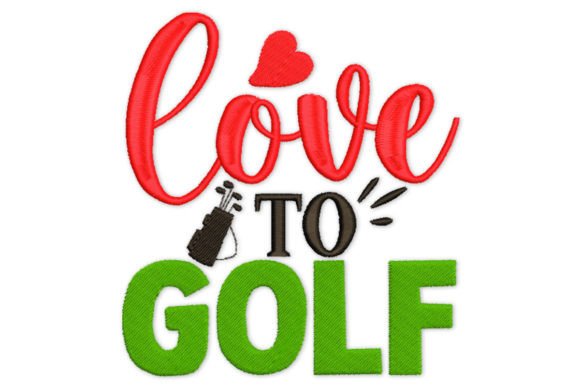
When I opened the Golf machine embroidery design, what struck me first wasn’t technical precision—it was mood. This isn’t a stiff logo or a hyper-realistic club rendering. It’s a heartwarming, slightly whimsical expression of passion: golf clubs cradling a heart-shaped ball. The layout feels balanced—not too tall, not too wide—and carries just enough detail to read clearly at 3–4 inches, without overloading small areas with dense satin stitch or fragile running stitch lines. As a designer who regularly selects embroidery files for client work and my own craft business, I immediately pictured it on a soft cotton tote bag for a local golf league fundraiser—friendly, personal, and unmistakably sporty without shouting.
Where Golf Shines in Real Projects
I tested Golf across several real-world applications, and its strength lies in context-sensitive charm. On a heavyweight cotton sweatshirt? It stitched cleanly with moderate fill stitch density—no puckering, no thread breakage. On a lightweight linen tea towel? With light tear-away stabilizer and reduced top tension, it held shape beautifully and kept the heart’s curves soft and intentional. For baby embroidery—say, on a gauzy onesie—I’d recommend using it as a single focal point (center chest or back), not layered with text, since the heart-shaped ball relies on clean edge definition.
It also works well for embroidered patches: the outer outline is distinct, the interior fills are open enough to avoid stiffness, and the overall footprint fits comfortably inside a 4×4 hoop—ideal for small-batch patch production. As an Etsy seller, I’d list this as a “ready-to-embroider” digital embroidery file paired with a printable mockup showing it on a relaxed-fit cap and a neutral-toned apron. Customers respond to that kind of visual clarity—it builds trust before they even stitch.
Where to Use Golf Thoughtfully
That said, Golf isn’t universally forgiving—and that’s okay. Its charm depends on execution. On stretchy fabric like jersey t-shirts, skip direct hooping; use cutaway + topping to keep the heart’s curve from distorting. On dark fabric, test your thread colors carefully—the heart-shaped ball needs contrast to read as a heart, not just a blob. And on curved surfaces like caps, position it toward the front panel’s flatter zone; avoid the crown seam where distortion risks blurring the delicate club shafts.
I wouldn’t push Golf into ultra-small applications: it’s not ideal for a 1.5-inch hat brim or a tiny baby bib corner. Likewise, avoid pairing it with overly busy backgrounds—this design earns attention by breathing space around it. If you’re building a boutique product line, let Golf anchor one piece (a pillow cover, a holiday gift set) rather than crowd a multi-design sampler.
Design Integrity Meets Customer Perception
What makes Golf stand out isn’t just aesthetics—it’s how it shapes perception of the finished product. When stitched cleanly, it reads as handmade *with intention*: thoughtful, warm, and niche-specific. That builds customer trust far more than a generic sports icon ever could. I’ve seen clients choose custom apparel based purely on whether a design felt “like them”—and Golf delivers that quiet confidence. It doesn’t scream “golf lover”; it smiles.
For small shop owners, that translates directly to value. A sweatshirt with Golf stitched front-and-center feels more personal—and therefore more giftable—than a printed slogan. It elevates a simple kitchen towel into a curated hostess gift. And because it avoids clichés (no eagles, no scorecards, no aggressive fonts), it stays fresh across seasons and age groups—perfect for wedding gifts (golf-loving couples), retirement presents, or even nursery decor when softened with pale thread palettes.
Practical Designer Notes Before You Stitch
- Always test first: Run Golf on scrap fabric matching your final project’s weight and stretch—especially if using textured weaves or blends.
- Check stitch density: Look for tight clusters near the heart’s curve or club grips. If your machine hesitates or threads snag, consider simplifying or adjusting underlay in your editing software.
- Confirm hoop size: While likely optimized for standard hoops, verify compatibility with your machine before batching orders—especially if offering commercial embroidery services.
- Review small details: Zoom in on the ball’s heart shape. Does it hold clarity at your target size? If edges blur in simulation, reduce scale slightly rather than risk loss of meaning.
- Mock it both ways: View Golf in black-and-white mockups—some thread shades lose distinction on dark fabrics, and the heart must remain legible.
- Stabilizer matters: Use medium-weight cutaway for knits, tear-away for stable wovens, and water-soluble topping for napped or fuzzy surfaces like terry cloth towels.
- Licensing check: Since this is marketed for hats, shirts, and more, confirm whether the license permits resale of finished products or only personal use—critical for Etsy sellers and craft fair vendors.
A Design That Fits Its Purpose—Without Overreaching
Golf doesn’t try to be everything. It doesn’t mimic photo realism, nor does it shrink into minimalist abstraction. It lives in that sweet spot where sport, sentiment, and stitchability meet. As a working embroidery designer, I appreciate that restraint. It means less troubleshooting, more consistent results, and—most importantly—a finished product that feels human-made, not mass-produced.
Whether you're stitching personalized gifts for golf enthusiasts, building a small shop’s seasonal collection, or sourcing reliable design assets for client work, Golf earns its place—not as filler, but as a considered, joyful choice. Just remember: let it breathe, support it with smart stabilizing, and trust its quiet personality to do the rest.