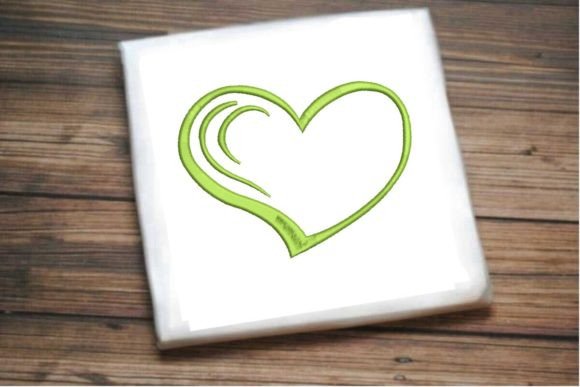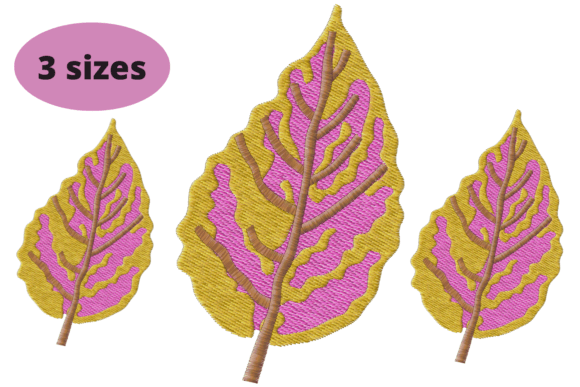
Heart with Tree Leaf Decor
A Thoughtful Stitch Before the Needle Drops
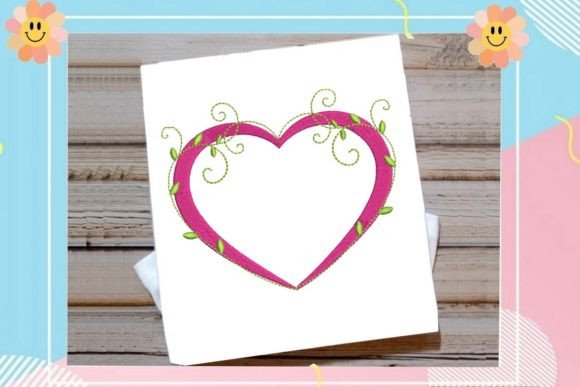
When I first opened Heart with Tree Leaf Decor, I didn’t just see a Valentine’s Day embroidery file—I saw a quiet moment: a heart softened by leafy branches, not hearts-with-arrows cliché, but something grounded, tender, and quietly poetic. It’s not overly ornate, yet it carries enough detail to feel intentional—not filler, not trend-chasing. As a designer who tests dozens of machine embroidery designs each month for client work and my own craft business, this one landed with calm confidence. It’s the kind of design I’d reach for when stitching a personalized baby onesie for a woodland-themed nursery or embroidering a linen tea towel for a boutique gift set.
Where This Design Naturally Lives
Heart with Tree Leaf Decor thrives in projects where warmth and subtlety matter more than flash. Think: embroidered tote bags for eco-conscious brands, soft sweatshirt fronts for small-batch apparel lines, pillow covers for cozy living rooms, or delicate aprons for bakeries and florists. I recently tested it on a medium-weight cotton twill tote—hooped with medium tear-away stabilizer—and the result felt handmade without looking amateurish. The leaves wrap gently around the heart’s curves, avoiding sharp corners or jagged edges that can snag or distort on textured fabric. That flow makes it unusually versatile across custom apparel, holiday embroidery, and even wedding-adjacent gifts (think “love grows here” nursery decor or anniversary kitchen towels).
What Customers Actually Notice
People don’t read stitch counts—they feel balance. With Heart with Tree Leaf Decor, the visual weight sits comfortably: the heart anchors the composition, while the leaves add organic movement without overwhelming. On dark fabric, the design reads clearly if you choose thread colors with enough contrast—navy thread on charcoal fleece, olive green on cream linen. In mockups, it holds up well in both color and grayscale, which matters when prepping printable mockups for Etsy listings or social media previews. Buyers respond to its sincerity—it doesn’t shout “Valentine’s Day!” It whispers “care,” which builds trust faster than any sales copy.
Real-World Embroidery Considerations
This isn’t a design that forgives rushed prep. Its charm lies in clean line work and gentle fill transitions—so stitch density matters. If your machine tends to pile up dense satin stitch in tight curves, test Heart with Tree Leaf Decor on scrap first, especially near the leaf tips and heart’s lower curve. It performs best on stable, medium-weight fabrics: cotton poplin, brushed poly-cotton blends, medium denim, and quilting-weight linen. Avoid using it full-size on thin jersey or heavily stretchy knits without proper cut-away stabilizer and careful hooping—those delicate leaf outlines can blur or pucker.
For curved surfaces like caps or baby beanies, scale down to 3–3.5 inches and confirm hoop compatibility. The design’s shape is compact enough to fit standard 4x4 hoops at smaller sizes, but check your file’s actual dimensions before committing to a cap project. On textured fabrics—like terry cloth towels or bouclé blankets—reduce fill stitch density slightly and consider adding a light topping stabilizer to keep leaf details crisp.
Where Caution Is Wise
- Small hoop sizes: Don’t force it below ~2.75" without verifying clarity—tiny leaf veins may vanish.
- Dark or black fabric: Use high-contrast thread (e.g., ecru or light sage on black) and test brightness in natural light.
- Layered garments: Avoid placing it over thick seams or pockets unless you’ve added extra stabilizer underneath.
- Frequent-wash items: Reinforce with quality polyester thread and secure jump stitches—this isn’t a design built for heavy fill coverage, so durability relies on solid digitizing and execution.
Design Integrity Meets Business Practicality
As an Etsy seller and small shop product developer, I look beyond prettiness—I ask: does this design support my brand voice? Does it scale across formats? Does it hold value as a digital embroidery file *and* as a finished product? Heart with Tree Leaf Decor passes all three. It works equally well as a standalone embroidered patch, a subtle corner accent on a baby blanket, or the focal point of a holiday embroidery collection. Its nature-and-love theme bridges seasons—use it in February, yes, but also for spring baby showers or earth-day merchandise. That flexibility increases ROI for craft businesses investing in design assets.
It also lends itself beautifully to cohesive branding: pair it with simple botanical fonts in your listings, use consistent thread palettes across products, and photograph it on natural textures (wood, stone, unbleached cotton). That consistency tells customers you’re thoughtful—not just stitching, but curating.
Designer Notes You’ll Actually Use
- Test Heart with Tree Leaf Decor on scrap fabric *before* cutting into your final piece—especially if using textured, dark, or stretchy material.
- Check thread color contrast early—try it in both warm and cool tones against your base fabric.
- Review stitch density in the leaf clusters; adjust if your machine struggles with fine detail or dense fills.
- Confirm hoop size compatibility—don’t assume it fits your standard hoop without measuring the design’s bounding box.
- Inspect small details at 200% zoom in your embroidery software—look for stray jumps or under-digitized areas.
- Run a black-and-white mockup to assess silhouette strength—this design should read clearly even without color.
- Use appropriate stabilizer: medium tear-away for stable wovens, cut-away for knits, and topping for napped or textured surfaces.
- Verify licensing terms before selling finished items or bundling the digital embroidery file—commercial use isn’t automatic.
At its core, Heart with Tree Leaf Decor isn’t just another Valentine S Day embroidery—it’s a quiet, confident choice for makers who value meaning over mass appeal. It stitches cleanly, sells thoughtfully, and feels like a detail someone paused to get right. And in this fast-moving craft economy, that kind of intention is the most valuable thread of all.